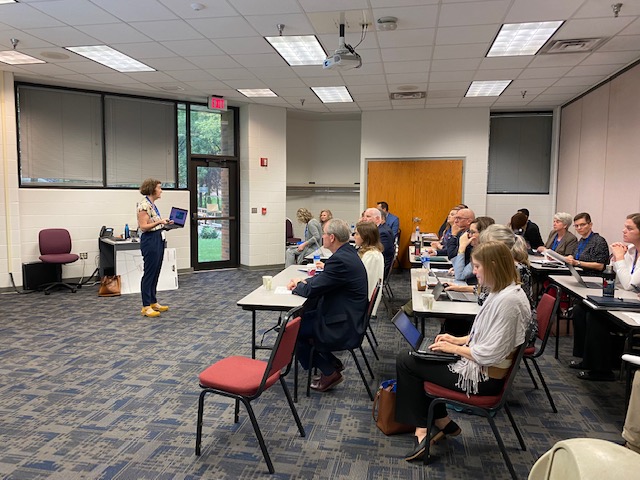
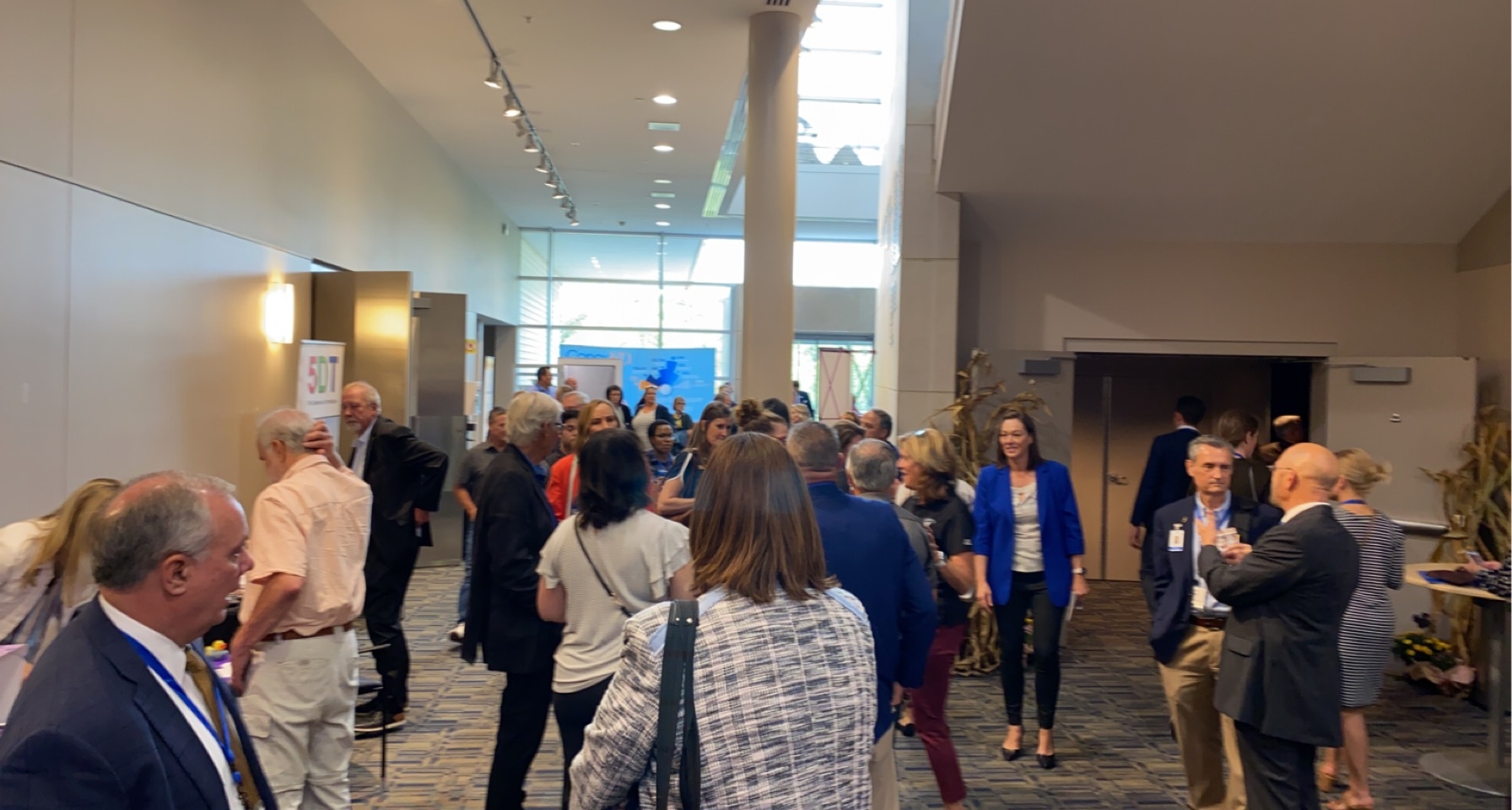
Read comments from just some of our conference attendees about the phenomenal connection, support, sharing of ideas and solutions.
The Innovation Center within the US Department of Agriculture’s Rural Development mission area is interested in reaching out to rural community and tribal colleges that offer a data science curriculum. Rural Development loans and grants finance homes, businesses, libraries, schools, roads, hospitals, utilities and more throughout rural America, and the Innovation Center is applying cutting-edge data analytical techniques and best practices to improve USDA’s program delivery.
We would like to partner with you to provide your Data Science graduates an opportunity to join a dynamic data analytics team. They will be involved in a wide assortment of “big data” projects that include dashboard construction, optimization modeling, economic and business forecasting, to name but a few. They will be able to work with issues affecting communities like theirs without having to relocate and leave those communities. USDA will benefit not only from their data science training, but also from their understanding of the opportunities and challenges in the rural areas in which they live.
Please contact me if you would like more information. I will be out of the office from Tuesday, September 8, through Friday, September 11, but I will be returning email and telephone messages.
Thank you!
John Delaney
Senior Policy Advisor, Data Analytics Division
Innovation Center, Rural Development
United States Department of Agriculture
202.720.9705
john.delaney@USDA.gov
www.rd.usda.gov
“Together, America Prospers”
Yes, one day we will have a vaccine for COVID-19 and we will be able to gather together again. But in the meantime, our RCCA conference will still be with the ACCT Leadership Congress… but virtual. I know that many of you are tired of zoom meetings, etc, but this Congress is worth your engagement.
I encourage you to view the ACCT website (ACCT.org/virtual-congress). The preliminary schedule for October 5 – 8, 2020 is now available. At least five sessions will be featuring rural community colleges. Also, the preliminary findings from the ACCT study of the Strengths, Needs, and Challenges of Rural Community Colleges (funded by Gates Foundation) will be shared.
There are other features for this particular Congress that I believe offer a special opportunity for you and your colleagues.
-
Reduced rates. For example, an individual can register for only $349 while a team of 4–6 colleagues can register for $1,249. This is very cost effective especially with no airline or hotel costs!
-
The sessions will all be recorded so you and your team can view and review at any time to fit your hectic schedules.
-
At other conventions, I always valued time to meet with my colleagues and talk about the sessions we had attended and then think what we could bring back to campus. Now, this year, those discussions don’t have to wait! View as a team and let your discussion change from ideas to plans!
I hope you will register for this Congress. RCCA will also be featured on a panel discussing rural challenges. I will be sharing how RCCA, your Alliance, is stronger than ever with continued efforts of networking, sharing solutions to complex concerns, and advocacy at the state and national levels. RCCA, the leading organization serving as the voice of rural colleges, is encouraging all of you to be more engaged in matters that need to be a top priority for action.
Stay well,
Penny Wills
President, RCCA
RCCA learned late last week that a beloved Past President of our Alliance passed away. Dr. Bill Scaggs was not only instrumental in the development of RCCA but also was the key person to frame its respected national reputation. Colleagues who had the opportunity to work with him described him as respected, humble, and inspirational. He will be missed. RCCA is indebted to him for his leadership.
You can read a full obituary at The Meridian Star.
Wiley Publishers has published a special edition of the popular New Directions for Community Colleges series entitled “Revisiting Rural Community Colleges.” The chapters focus on such topics as Economic Development in small rural areas; Multiple Roles of Faculty; Serving the Whole Rural Student; and more. Our own RCCA Staff member, Dr. Emily Klement authored an excellent chapter on Rural Partnership Models. And one of RCCA’s partners, Dr. Steve Katsinas co-authored another chapter on the Impact of Federal Budget Reductions on Rural CCs.
We are most fortunate that this special electronic edition will be available to RCCA members for the month of August, 2020. Please enjoy!
Here is the direct link: https://onlinelibrary.wiley.com/toc/15360733/2019/2019/187.
Each of the chapters is noted as Free Access!
Project Vision is a National Science Foundation (NSF) funded initiative to help colleges discover and match innovative ideas with NSF funding opportunities. Launched in 2020, Project Vision’s mission is to:
-
Provide two-year diverse, small, rural colleges and/or colleges with newer Presidents the expertise to generate innovative ideas that produce award-worthy NSF proposals.
-
Offers support at all levels of a college ecosystem including Board of Trustees, President, Administrators, and faculty.
-
Provide professional development activities for BOTs, Presidents, Administrators, Faculty, and Staff by socializing these entities to the NSF Advanced Technological Education (ATE) Program and other Division of Undergraduate Education (DUE) Programs.
-
This initiative is led by a seasoned team of NSF ATE experts, former College President/CEO, senior college administrators, and former NSF program officers, which couple on-site analysis with follow-up services to help each college build STEM and grand capacity.
How to apply
Interested colleges should complete an application on the Project Vision website – https://www.projectvis.org. Cohorts of 10 are selected each December for services the following year.
Each college is provided with a mentor team, a $6,000 stipend, introductions through Project Vision’s large network, and access to the NSF ATE Principal Investigators (PI) conference.
Project Vision (NSF supported) survey regarding grant funding at two-year colleges
Additionally, Project Visions is conducting a survey to better understand trends and how faculty and administrators are encouraged and incentivized to pursue grant funding opportunities, as seen from the perspectives of faculty, administrators, presidents, and boards of trustees at community colleges.
Taking the 10 minutes to provide your insights to the survey questions is a big ask. Project Visions understands, and is very appreciative of your time given. For participating, you’ll receive the findings from the study which should be useful for your career, colleagues, and college. Your answers will also be used to assess the fit between your college and Project Vision, NSF ATE, and other NSF DUE funding opportunities, which we will communicate back to you.
Please click the survey link below – and again, thank you.
https://www.surveymonkey.com/r/NSF-ProjectVision

Colleagues, this special program track on rural community colleges is an opportunity to share what you are doing to support rural communities and our students.
Rural community colleges face a number of acute challenges, including recruitment and retention of qualified faculty, access to broadband internet, and transportation issues to name a few. Despite these challenges, rural community colleges also have great potential to lessen the impact of education deserts, drive economic growth and help sustain vibrant communities. In partnership with the Rural Community College Alliance, ACCT seeks sessions that offer proven practices, local or state solutions that have helped strengthen your institution and community. The deadline for program submissions is July 1, 2020
The conference will take place from September 30 – October 3, 2020 in Chicago, IL. Learn more, submit your proposal, and register at https://congress.acct.org/
The Association of Community College Trustees (ACCT) has invited RCCA to assist with their Strengthening Rural Community Colleges Grant funded by the Bill and Melinda Gates Foundation. The purpose of the grant is to assess the needs of rural community colleges across the country. For more information about this critical study please see rural.acct.org
On behalf of the Rural Community College Alliance (RCCA) Board of Directors, I would like to announce the selection of Dr. Penny Wills as our Interim President. In addition to previously functioning as a member of the RCCA board, she has served, for 15 years, as president of two rural community colleges. Dr. Wills has earned a national reputation for her commitment to student success, regional economic development, and community partnerships. Under her leadership in Iowa, her team created the state’s first STEM Center, passed a major capital bond levy, and qualified as a semi-finalist for a prestigious Aspen Award. During her tenure as President in Arizona, Dr. Wills created the nationally recognized Regional Economic Development Center, Guided Pathways Program, and expanded staff development into International arenas.
Dr. Wills brings an unmatched level of enthusiasm and experiences to RCCA during this critical juncture for rural America. She looks forward to leading RCCA in these challenging times as she is passionate in her support of rural communities and the critical role of their community colleges.
In conclusion, the RCCA Board expresses our sincere appreciation for the service of our former President, Dr. Randy Smith and wishes him success during his post RCCA endeavors.
Thank you for your time during this transition period. (For more information email president@ruralccalliance.org)
Cordially,
Marlon R. Hall, EdD
Board Chair
Rural Community College Alliance